 Spring Hill Sprinkler Repair
 Irrigation Valve Repair in Spring Hill, FL
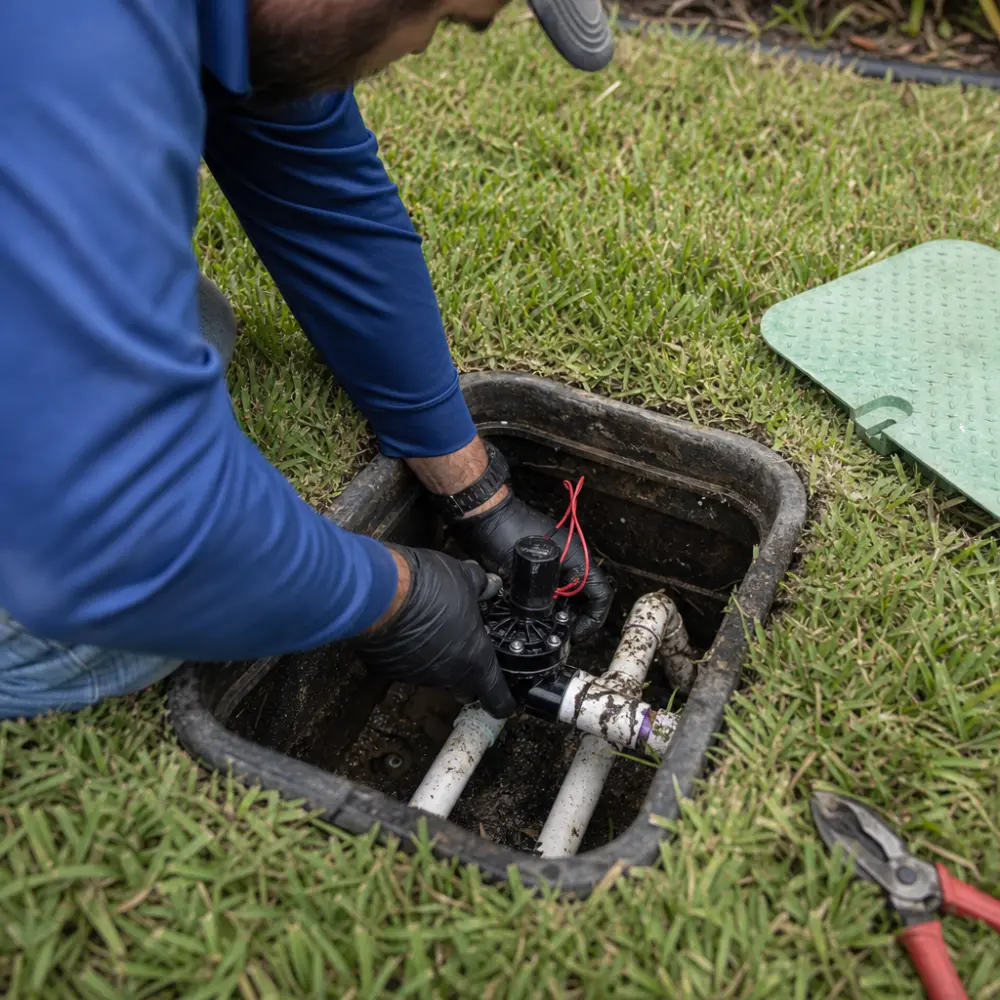
Irrigation valves are the point where the controller’s electrical signal becomes water actually flowing to a zone, and they are also the most common source of a dead zone, a zone that will not shut off, or a flooded valve box. Valve repair, a new diaphragm, a failed solenoid, or debris cleaned out of the seat, runs $150 to $350. Full valve replacement, when the valve body is cracked or worn past reliable sealing, runs $200 to $450.
What a valve actually does, and what fails on it
A residential irrigation valve is a solenoid-operated diaphragm valve: the controller sends a low-voltage signal to the solenoid, the solenoid lifts a plunger, and that lets water pressure push the diaphragm open so the zone flows. Every one of those steps is a separate potential failure point.
The diaphragm tears or wears out. Rubber diaphragms degrade with age, chemical exposure, and constant cycling. A torn diaphragm is the single most common cause of a valve that will not fully close, which shows up as a zone that will not shut off or a valve box that stays full of water even when nothing should be running.
Debris gets caught in the valve seat. Sand (common in Hernando County’s excessively drained Candler soil) or grit from an aging supply line can lodge in the seat and hold the valve slightly open, or block it from opening fully. Sometimes a valve just needs to be opened and cleaned, no parts required.
The solenoid fails electrically. A solenoid that has corroded internally or shorted will not lift the plunger at all, so the zone never gets water even though the controller is sending a normal signal. This is the same failure mode covered on our Hunter brand page, where the manufacturer’s own troubleshooting gives a normal resistance reading for a healthy solenoid and a clear sign of a failed one.
Wiring between the controller and the valve breaks or shorts. A nicked wire from a shovel, a rodent-chewed section, or a corroded splice inside the valve box can look exactly like a dead valve from the controller’s side, and a technician tests the wire before assuming the valve itself is bad.
Dead zone versus flooded valve box versus running zone: different failures, different fixes
A dead zone (nothing comes on) usually means the valve will not open: a failed solenoid, a wiring break, or in rare cases low water pressure reaching that valve at all. See the zone won’t turn on page.
A zone that will not shut off means the valve will not close: almost always a torn diaphragm or debris holding the seat open. See the zone won’t shut off page.
A flooded valve box with standing water even when the system is off means a valve is weeping continuously, or a fitting inside the box itself has a small leak. See the valve box full of water page.
Multiple valves, one box
Many Hernando County systems, especially older ones with several zones, run more than one valve out of the same valve box, called a manifold. When one valve in a manifold fails, it is common for a homeowner to assume the whole box is compromised. In practice, valves in a manifold usually fail independently, since each has its own diaphragm and solenoid; a technician tests each valve on its own rather than replacing the whole manifold because one valve failed.
Why this connects to your water bill
A valve that will not fully close does not always show up as a visible wet spot, particularly in the fast-draining sandy soil common across Spring Hill and Hernando County. Water pushed slowly through a partly-open valve can simply sink into the ground faster than it pools, which means the first sign homeowners notice is often the water bill rather than the yard. If that describes what you are seeing, the water bill spike page walks through how to confirm it is the irrigation system before we come out.
Booking a valve repair
Tell us whether the symptom is a dead zone, a zone that will not shut off, or standing water in the valve box, plus how many zones seem affected. A single-valve repair is a routine same-visit fix; a manifold with multiple suspect valves takes a bit longer to fully test. We work Spring Hill, Brooksville, Weeki Wachee, Hudson, Masaryktown, Ridge Manor, Timber Pines, and Hernando Beach. Full pricing is on the pricing page.
Frequently Asked Questions
What does valve repair cost versus full replacement?
Repair (a new diaphragm, solenoid, or cleaning debris out of the valve seat) runs $150 to $350. Full valve replacement, when the valve body itself is cracked or too worn to seal reliably, runs $200 to $450.
My valve box is full of water. Is that a big problem?
It usually means a valve is not sealing, either weeping past a torn diaphragm or stuck slightly open, or that a fitting inside the box has a small leak. It is worth calling about promptly, since it wastes water continuously and is often a $150 to $350 fix, not a major repair.
Can a valve fail even if I never see a wet spot in the yard?
Yes. A valve that will not fully close can push water out through the heads on its zone at low pressure without ever pooling visibly, especially in Hernando County's fast-draining sandy soil. It often shows up as a water bill spike before it shows up as a wet lawn.
Do all valves on my system fail at the same time?
No, and that is actually useful information. If every zone is dead at once, look at the controller and the main power or water supply first. If one zone is dead while the rest work fine, the problem is almost always isolated to that valve or its wiring.